

Clinton, MA is a town of muted Victorian grandeur, brick mills, and dive bars — one of which, The Old Timer, hosted trivia nights and I fell in love with Alan there. It has the best Main Street around and a really nice Central Park. The townies are friendly and a dog almost bit me on a walk once and we all contain multitudes.
Last week AP and I attended a showing of The Extraordinary Caterpillar by Grow Native at the Clinton Historical Society. We loved it; it features lots of alien-looking caterpillars, and includes host plant suggestions in an uplifting way.
Many moths do eat living leaves, and at least 70 known moth species are litter (dead leaf and bark) eaters. Oak is a keystone plant for over 150 species, and caterpillars can have generalist or specialist diets. Lawns are generally bad for ecosystems, though native grasses and weeds are important. Vines that strangle trees are bad, and you can guess. Similarly, animal parasitism is abundant, particularly with wasps laying their eggs next to caterpillar eggs or on a living caterpillar.
It can take up to 9,000 caterpillars to raise a clutch of chickadees, so they’re a key link for turning plant energy into food for predators. Also moths are vital pollinators.
The Caterpillar Lab (a non-profit in NH, featured heavily in the movie) hosts Moth-ing events and I was lucky enough to attend one from 9pm-midnight at our local botanic garden. I really wanted to go and snagged the last ticket. Sometimes it’s easier to be close to shaggy butterfly cousins that will die in a week than your own heartbeat and that’s where I was at. I’m still dealing with heavy meds (Anastrozole, Lupron, Kisqali) side effects and I feel that this event helped me recalibrate.
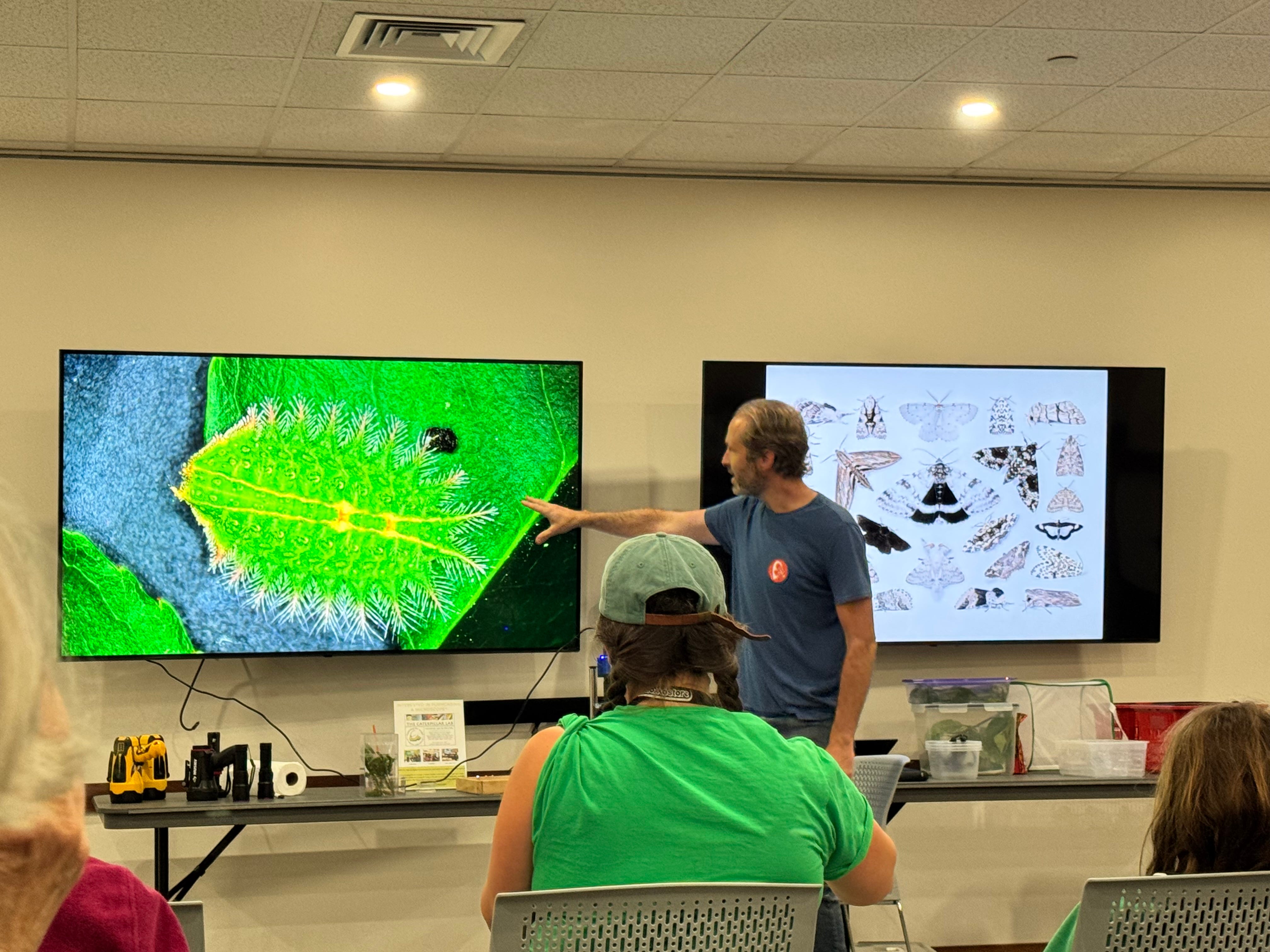
I expected to be amazed by grand things, and am pleased that I was wrong. A small moth seemed to leap into founder Sam’s hand while he was talking about it. “I paid it 20 bucks earlier,” he joked.
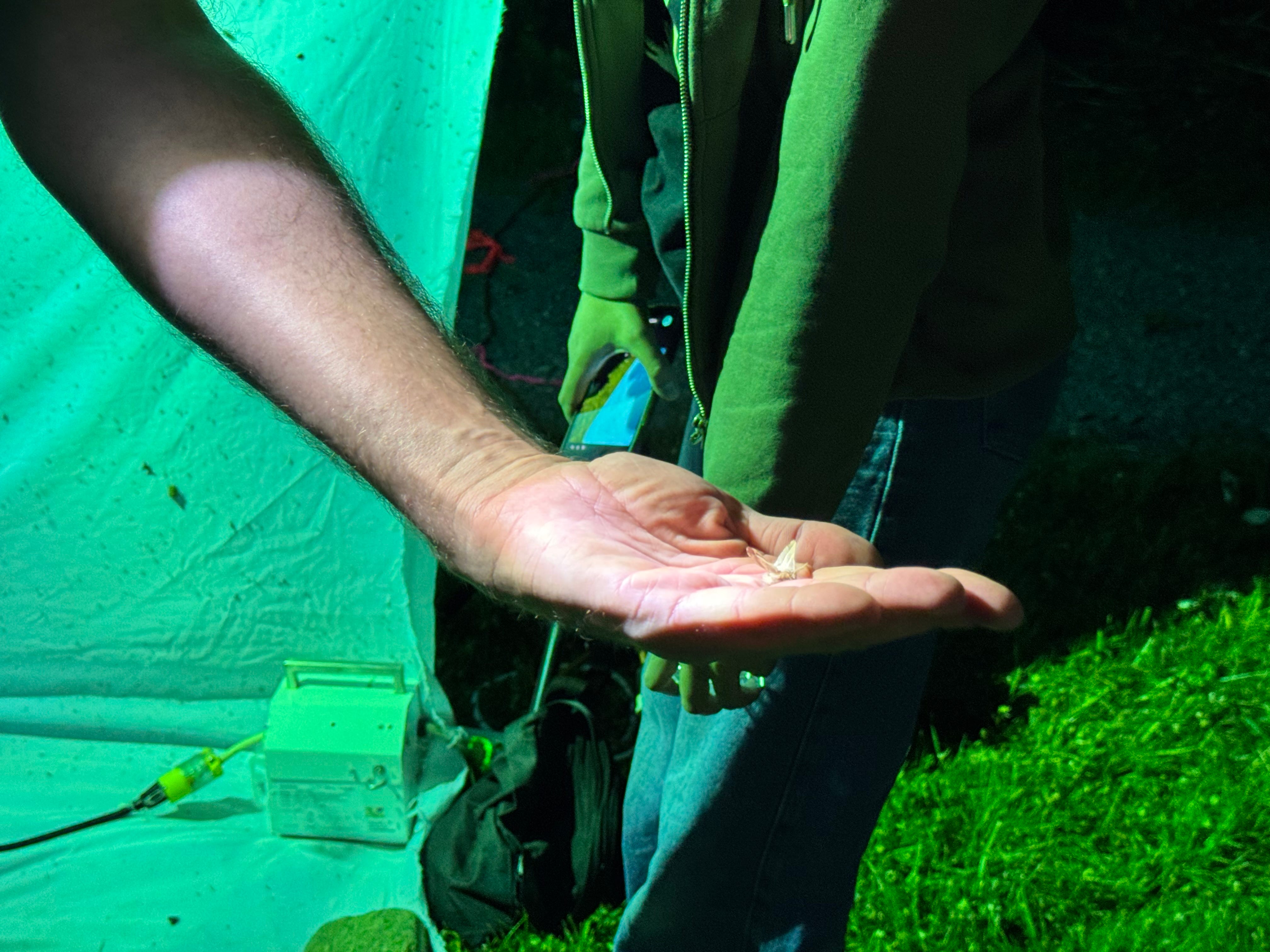
The setup for the night consisted of three locations; a meeting room with a digital microscope hooked up to a projector; a UV-lit white sheet by the woods; a UV-lit white sheet by the pond. He noted that aquatic moths have external gills, and that under a microscope one-celled organisms can be seen on the gills, wild.
Sam asked us to note that we study moths on the sheet but that they’re not having a good time; the light drives them into a sort of madness because they use the bright light of the sun to situate themselves. He provided a basket with insect specimen jars and encouraged us not to only notice the large, showy, charismatic moths.
Most moths are tiny micro moths: they’re tiny as caterpillars, and a speck on a sheet to us. He said to bring a couple moths to the microscope and think about how each moth has a story within its ecosystem.
“Each night is a season to a moth. When you’re out moth-ing, it can be one moth’s first night and another moth’s last night. It’s short, sometimes a few days. Some moths are non-eating [they don’t have mouths] and spend most of their time as caterpillars. Others invest heavily in the moth phase with strong legs and antennae. You can tell by how they move.”
Giant eyes
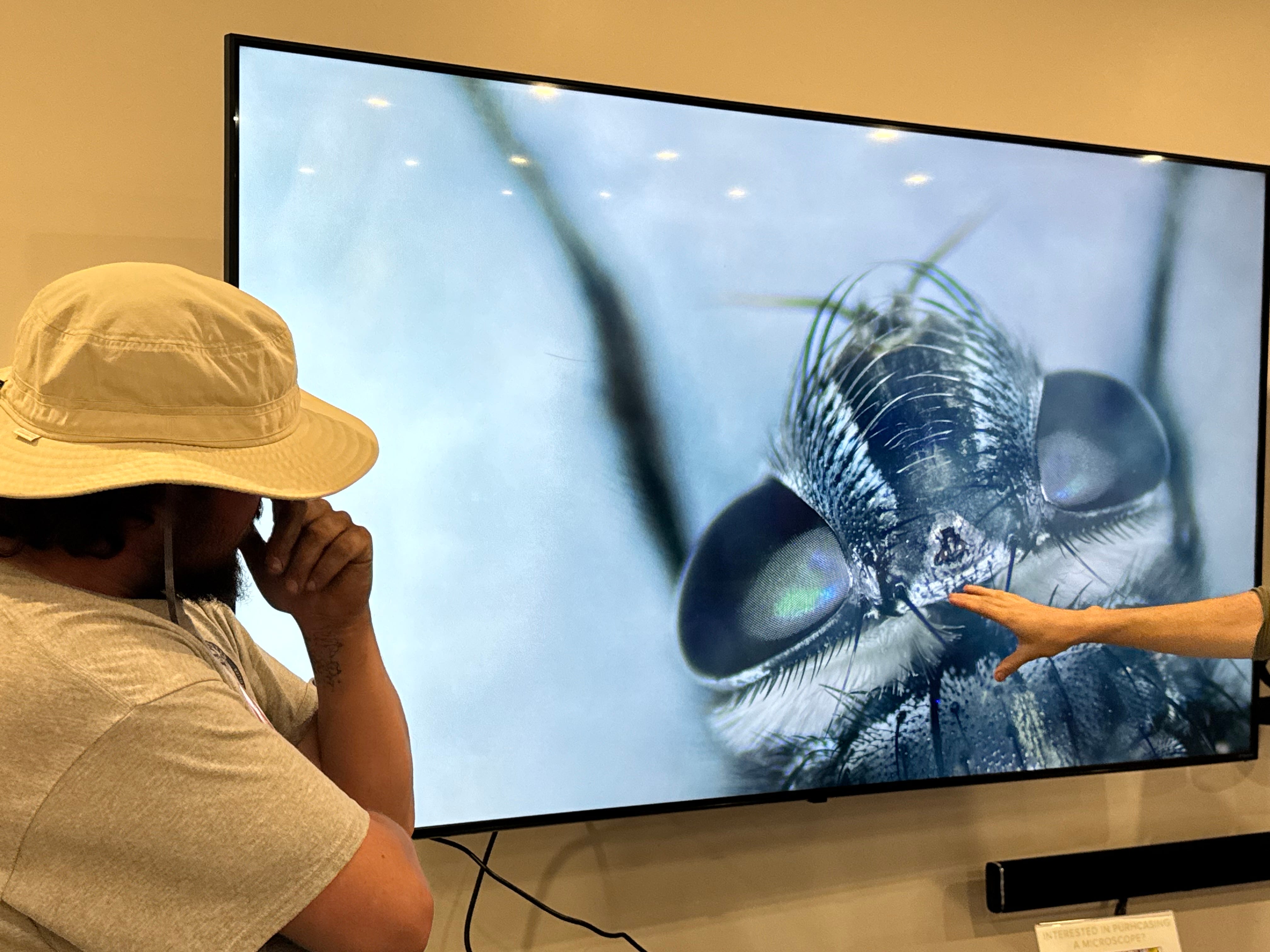
Compound eyes are beautiful under a microscope, even when it’s a fly.
The Mantis Fly is not a mantis or a fly; it’s a lacewing.
When Jack showed moths with their underside facing up, we all couldn’t help laughing for some reason. Someone says in the video that the proportions of eyes-to-head are just comical. I’ll add that it feels like they’re seeing you back and that gives an eerie sensation that we must laugh off.
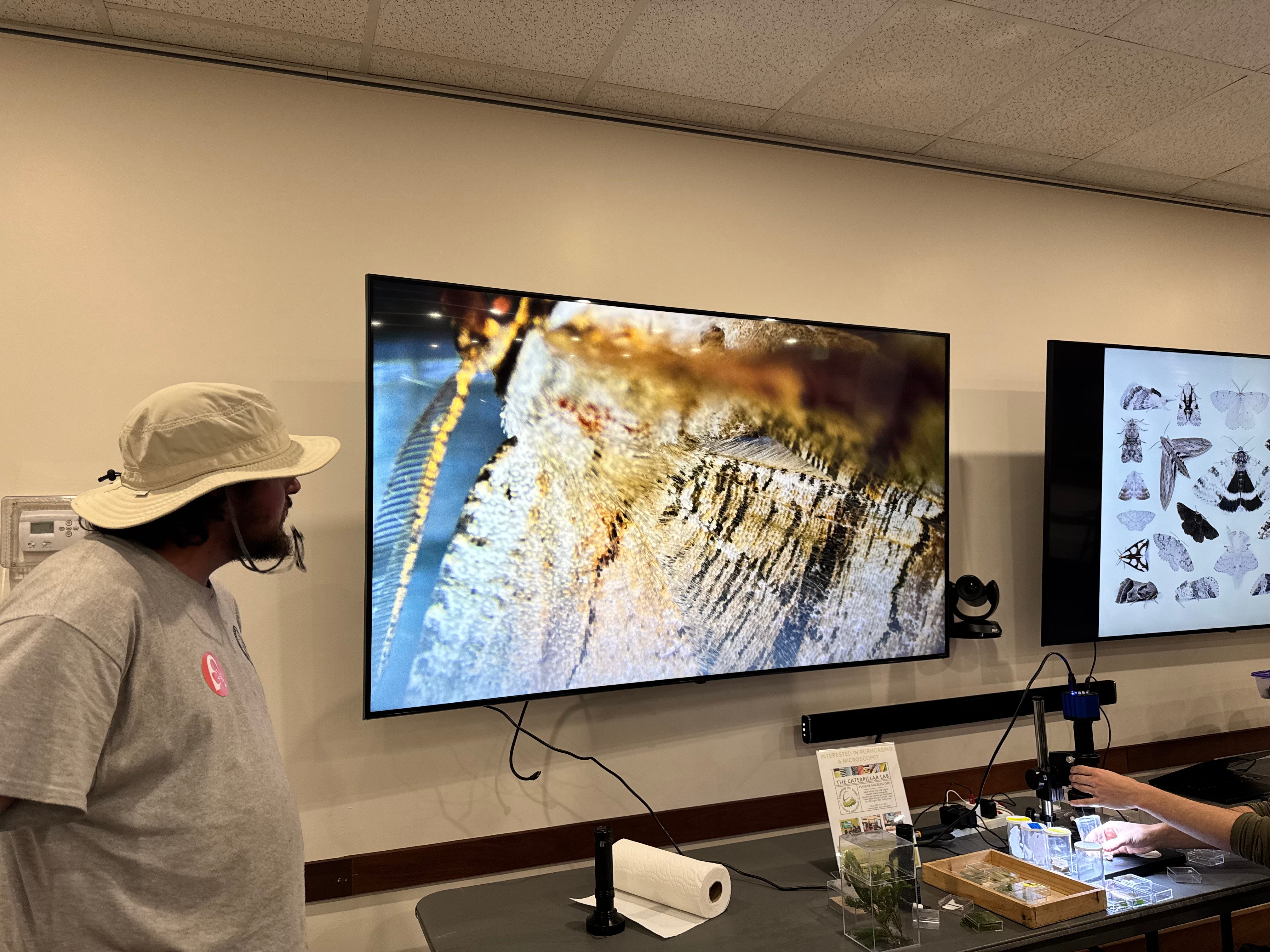
Check out the stunning detail on this bark-camouflaging moth. Also, many caterpillars use photoreceptors in their feet to sense the colors of the tree they’re on (that’s the current theory, they said) and they turn from green to browner throughout the seasons.
There’s a difference between looking and really looking, and a microscope provides the latter. I remember hearing during the pandemic that loupes (jeweler’s magnifying glasses) were popular.
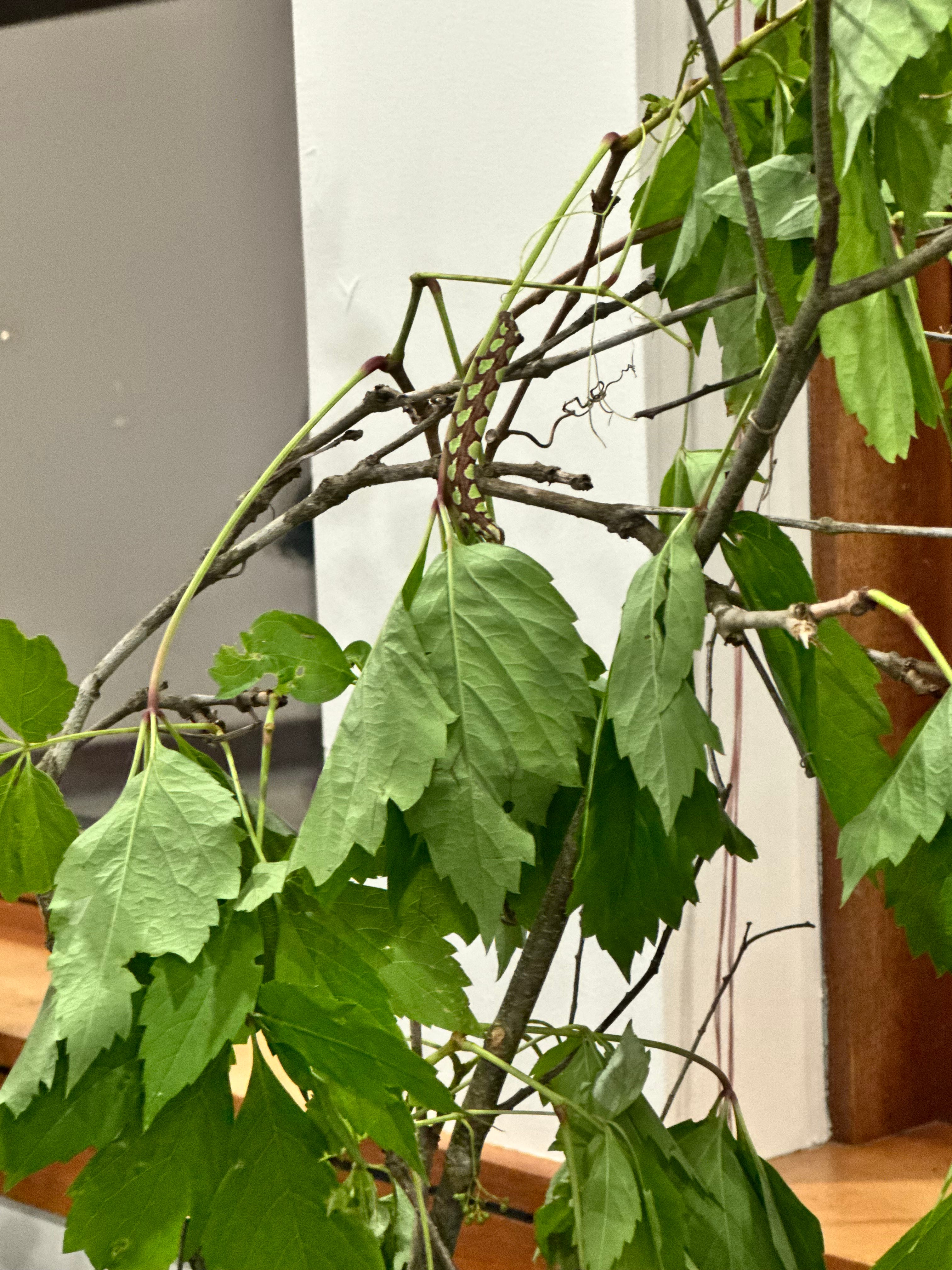
The Sphynx Moth mimics snakes as a caterpillar, and many moths mimic bird droppings, and tree bark for camouflage.
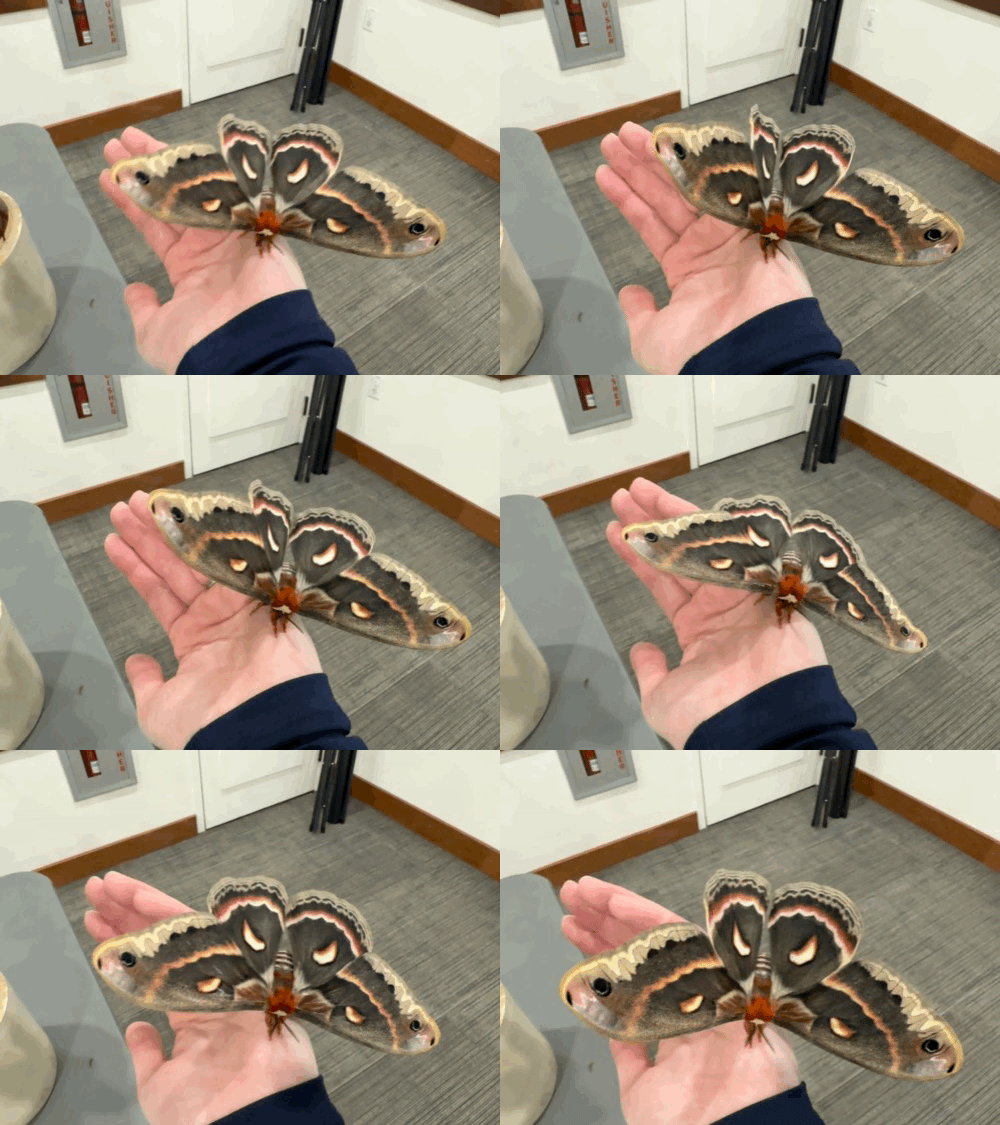
The Cecropia Moth, the largest native moth in North America, is a fuzzy stunner that I may have cooed to when it was on my hand. Animals really do have a personality when you see them up close (this is part of what drives the Caterpillar Lab to do up-close events). The strange caterpillars were charismatic as well.
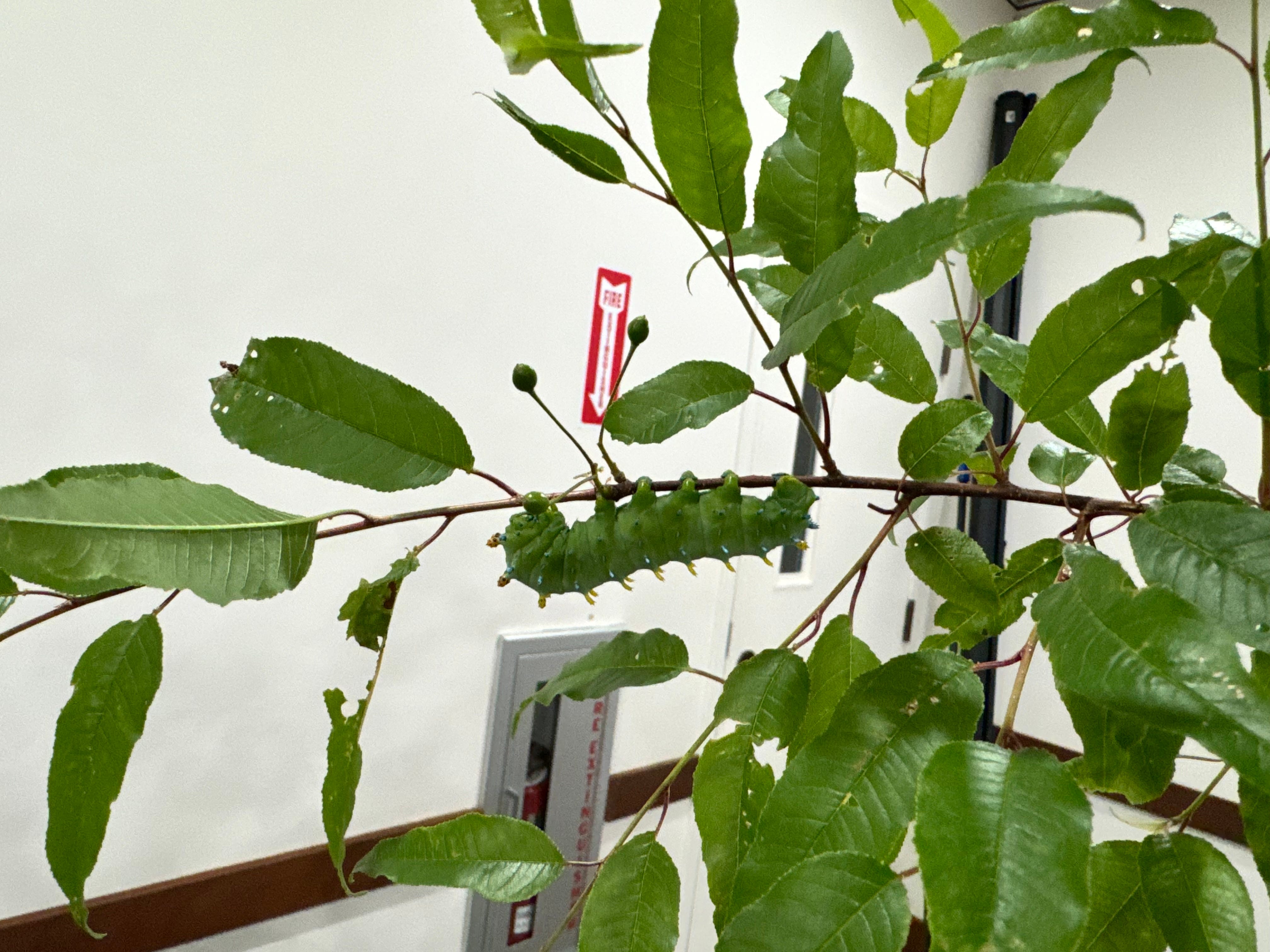
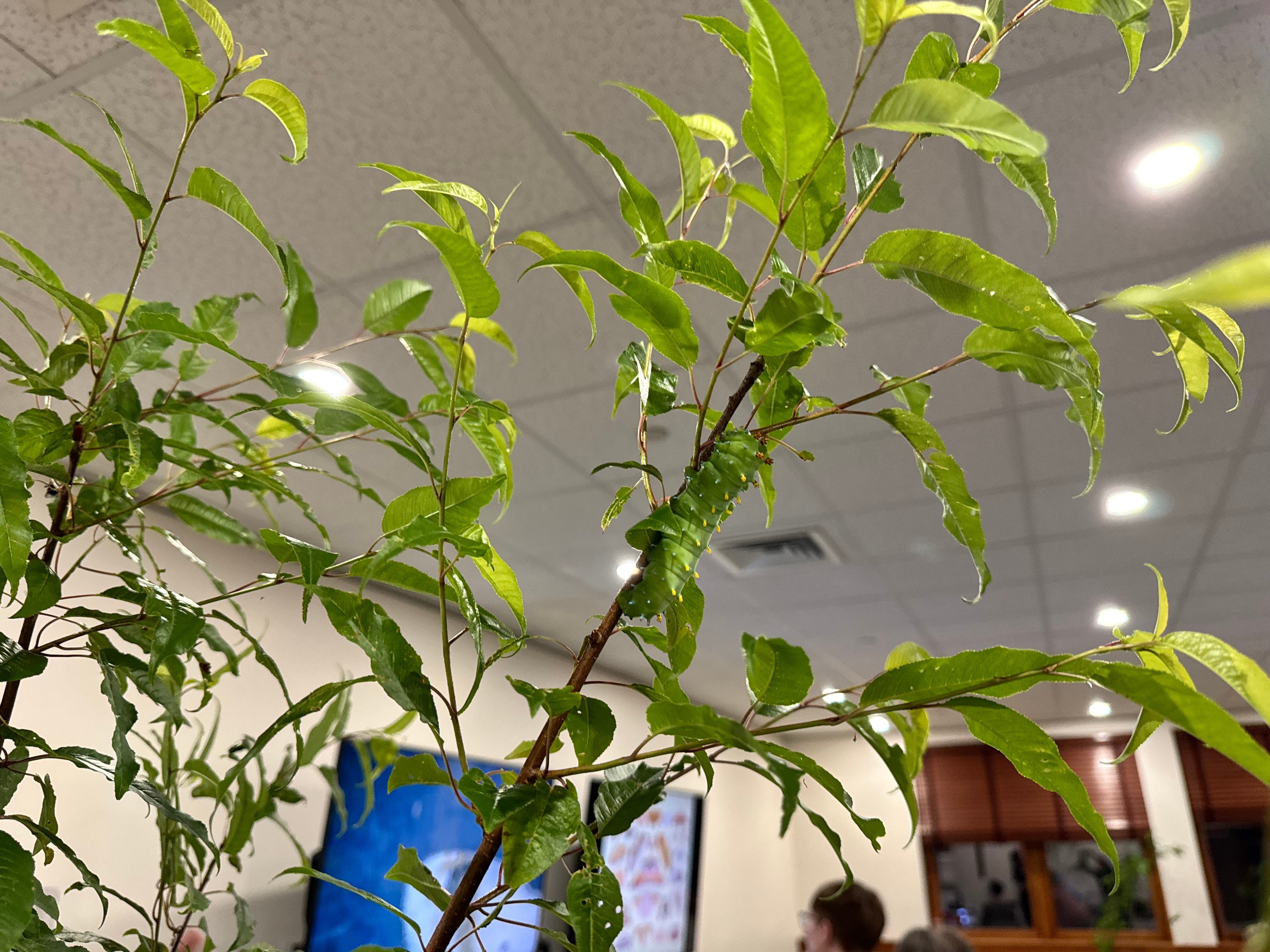
If you’re curious, the time really flew by. I’d brought a crochet bag and didn’t make a stitch, I was that rapt. Mostly at the microscopic details.


